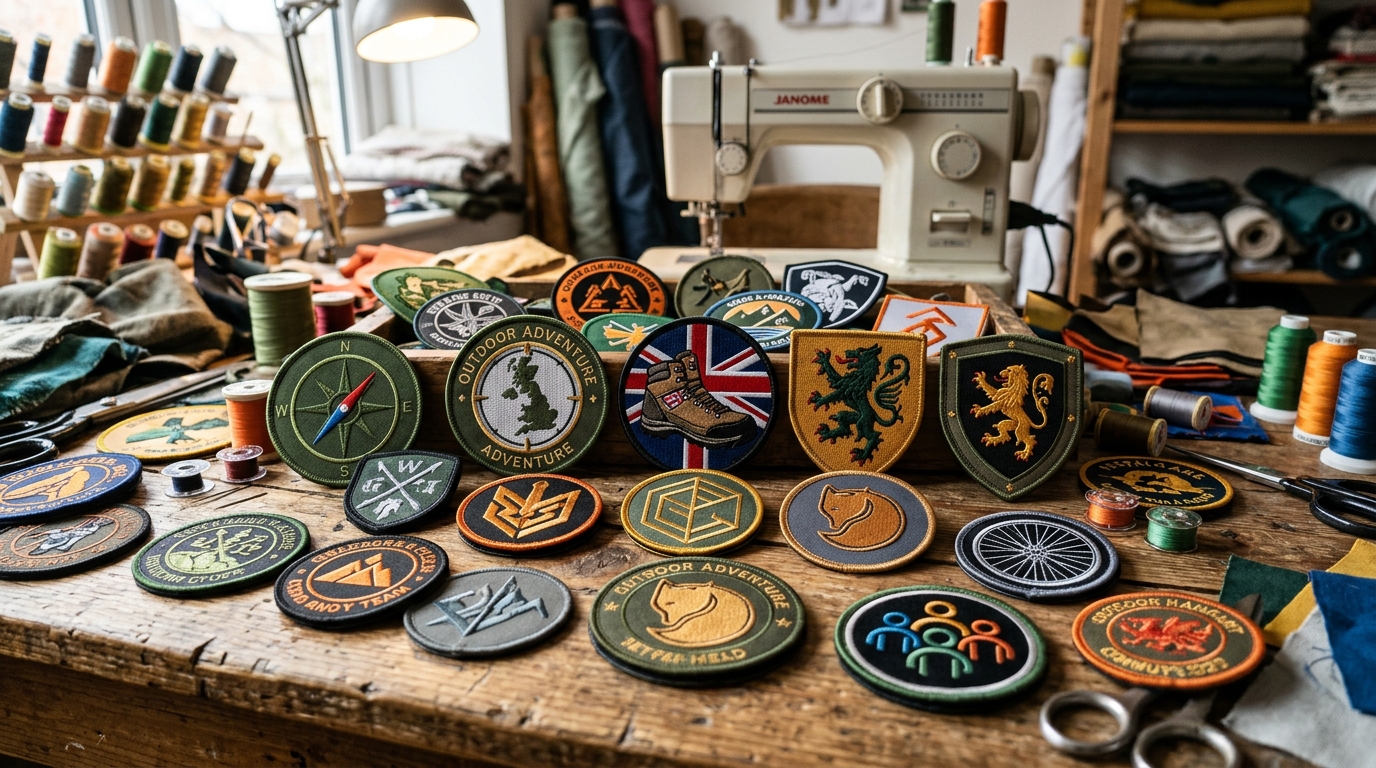
A small patch can say a lot about the people who wear it. It might represent a team, celebrate a shared achievement, show support for a cause or simply give someone a way to express their personality. Although morale patches are often associated with military and tactical communities, their appeal has grown far beyond those settings. Today, businesses, outdoor enthusiasts, clubs, collectors and organisations use them to create a recognisable identity and make everyday equipment feel more personal.
This is one reason why demand for custom morale patches UK services continues to attract attention. People want designs that mean something to them rather than generic patches that look the same as everyone else's. They want to choose the artwork, colours, wording, shape and materials, creating something that reflects their group or individual style.
Whether you are organising a team, building a brand, preparing merchandise for an event or looking for a distinctive accessory, custom patches offer plenty of creative possibilities. With the right design and a reliable production partner, even a relatively simple idea can become a memorable finished product.
This guide explores how morale patches UK buyers can approach the design process, what to consider before ordering, and how personalised patches can help bring people together. It also looks at materials, printing methods, wholesale orders and the importance of choosing an experienced morale patch manufacturer UK customers can trust.
Why Morale Patches Have Become So Popular
Morale patches have a personality that many ordinary accessories lack. They are small enough to attach to clothing, bags and equipment, but they can carry a message, image or symbol that immediately catches attention.
For some people, a patch represents belonging. A hiking group might use the same design on its backpacks, while a sports team could create patches to celebrate a particular season. A business might use them as branded merchandise, and an event organiser could produce limited-edition designs for participants.
The appeal is not limited to practical use. Collecting patches has also become a hobby for people who enjoy discovering unusual artwork, funny slogans, creative illustrations and designs linked to particular interests.
Another reason for their popularity is flexibility. A patch can be colourful and playful, clean and professional, or bold and tactical. There is no single style that defines every morale patch. The finished design depends on the message and the audience.
This freedom makes custom morale patches suitable for a wide range of applications. Instead of selecting a standard design from a catalogue, customers can create something that feels connected to their own story.
Custom Patches Give Every Group Its Own Identity
A strong group identity does not always come from large logos, uniforms or expensive promotional materials. Sometimes, a small shared detail is enough to make people feel connected.
Custom morale patches provide that detail. When members of a group wear the same patch, it creates a visual connection without requiring everyone to dress identically. The design can represent a shared interest, a team name, a location, an inside joke or a memorable experience.
For organisations, this can be a simple way to build recognition. A patch attached to a jacket or backpack can make a group easier to identify at an event. It can also become a keepsake that members hold on to after the activity has finished.
Businesses can use patches in a similar way. Rather than handing out another disposable promotional item, they can offer something people may genuinely want to wear or collect. A well-designed patch can become part of a brand's identity while giving customers and employees a more personal connection with the business.
The most effective designs usually have a clear purpose. Before creating artwork, consider what the patch should communicate. Is it meant to represent a team? Promote a company? Celebrate an achievement? Or simply provide a fun design that people will enjoy wearing?
Answering this question early makes it easier to choose the right visual style.
The Creative Freedom of Personalised Morale Patches
One of the biggest advantages of personalised morale patches is the ability to control the details. You are not restricted to a standard shape, colour combination or message. The design can be developed around your own ideas and adjusted to suit the intended use.
For example, a group of outdoor enthusiasts might prefer a patch featuring a mountain outline, compass or trail-inspired illustration. A gaming community could choose a character, emblem or humorous slogan. A business might use its existing logo with a short message that makes the design feel more approachable.
Personalisation can also be subtle. You do not necessarily need a complicated illustration or several lines of text. A distinctive symbol, carefully selected colours and a clean layout can be enough to make a patch recognisable.
When planning your design, think about the following elements:
Artwork: Choose an image, emblem or illustration that communicates the main idea.
Colours: Select a combination that suits the design and remains easy to recognise.
Text: Keep wording short enough to read comfortably at the finished size.
Shape: Consider whether a traditional rectangle, circle, shield or custom outline works best.
Size: Make sure the design is practical for the clothing or equipment where it will be attached.
Attachment: Decide whether hook-and-loop backing, an iron-on option or another fixing method suits your needs.
These details work together. A design that looks attractive on a computer screen may need adjustments before it becomes a practical physical patch. Good planning helps avoid overcrowded artwork and makes the finished result more effective.
Choosing a Design Style That Matches Your Purpose
There is no reason every morale patch should look the same. The best style depends on the audience, message and intended application.
Some customers prefer a traditional military-inspired appearance. These designs often use bold lettering, strong symbols and a limited colour palette. Others prefer modern illustrations, cartoon characters, humorous messages or bright colours.
A professional organisation might choose a minimal design that reflects its existing branding. A recreational group could go in a completely different direction, using playful artwork that gives members something to smile about.
The important thing is consistency. If the patch represents an established organisation, its appearance should fit the wider identity. If it is being created as a standalone design, it should still have a clear visual focus.
Avoid adding too many unrelated elements simply because there is room. A patch is a relatively small canvas. Every symbol, line and word should have a reason for being there.
For example, if you are designing a patch for a hiking group, a simple mountain illustration with the group's name may communicate the idea more effectively than a design containing multiple landscapes, icons and long messages.
The same principle applies to custom military morale patches and tactical-inspired designs. Strong artwork, readable text and a balanced layout generally create a more memorable result than excessive decoration.
Custom Military Morale Patches and Their Meaning
Military-inspired patches have a distinctive place in morale patch culture. They can reflect unit identity, shared experiences, humour, personal interests and the bonds developed between people working together.
For customers interested in custom military morale patches, the design process often starts with a particular symbol, phrase or visual reference. Some want a traditional emblem, while others prefer something more modern or light-hearted.
The opportunity to personalise these designs makes them especially meaningful. A patch can commemorate a training event, recognise a team, represent a particular group or become a keepsake associated with an important experience.
However, it is worth thinking carefully about how official symbols, insignia and protected artwork are used. If a design is intended for a private group, make sure the artwork is appropriate for that purpose. If you are producing patches for commercial sale, check that you have permission to use any third-party logos, names or protected imagery.
A good design does not need to copy an existing emblem to communicate a military-inspired style. Original artwork can use familiar visual themes while giving the patch its own identity.
This approach also creates more opportunities for personalisation. You can develop a design around a group's own story rather than relying on a generic image.
Custom Tactical Morale Patches for Everyday Equipment
Tactical-inspired patches are popular because they combine practical attachment options with distinctive visual designs. They are commonly associated with backpacks, jackets, equipment bags and other items that feature compatible patch panels.
Custom tactical morale patches can be designed for a wide range of users, including outdoor enthusiasts, airsoft communities, collectors and recreational groups. Their appearance can be functional and understated or bold and humorous, depending on the intended audience.
When designing a tactical-style patch, consider where it will be used. A patch for a backpack may need a different size from one intended for a sleeve or smaller equipment panel. The attachment system should also match the surface where the patch will be placed.
Hook-and-loop backing is a popular choice because it allows users to attach and remove patches without permanently fixing them to an item. This makes it convenient for people who enjoy changing designs depending on the activity or occasion.
A durable finish is also worth considering. Equipment can be moved, stored and used in different conditions, so the patch should be suitable for its intended environment. Discuss the available materials and construction options with your supplier before confirming an order.
Finding the Right Morale Patch Maker UK Customers Can Rely On
Choosing a supplier is an important part of creating a successful patch. The artwork might be excellent, but poor communication, unclear specifications or inconsistent production can affect the final result.
A dependable morale patch maker UK customers can work with should make the process straightforward. You should be able to explain your requirements, discuss design options and understand what is included in the production process.
Start by reviewing the supplier's previous work. Look for examples that demonstrate a range of designs, shapes, colours and finishes. This can help you understand whether the manufacturer has experience producing patches similar to the ones you need.
Communication is equally important. A good supplier should be willing to discuss practical details rather than simply accepting an image and moving straight into production. They may need to clarify dimensions, colours, attachment methods and artwork requirements.
Before placing an order, consider asking about:
Available patch materials and construction styles.
Minimum order quantities, if applicable.
Artwork preparation and design support.
Sample or proof approval.
Production times and delivery arrangements.
Pricing for different order quantities.
Available backing and finishing options.
Clear answers make it easier to compare suppliers. They also reduce the risk of misunderstandings once production begins.
Price matters, but it should not be the only deciding factor. A slightly cheaper option may not provide the finish, communication or consistency you expect. Look at the overall value of the service rather than focusing only on the initial quote.
Why Working With a Morale Patch Manufacturer UK Businesses Understand Matters
A specialist morale patch manufacturer UK customers can communicate with may offer advantages when it comes to understanding the requirements of a project.
For example, a customer ordering patches for a local event may need a different approach from a business ordering branded merchandise in larger quantities. A manufacturer that understands the intended use can help identify practical choices and explain which production options are suitable.
Local communication can also make discussions about specifications and delivery easier. You can explain the project in familiar terms and ask questions before confirming the order.
That does not mean every supplier will offer the same services. Some focus on smaller personalised orders, while others specialise in larger production runs. It is important to check that the supplier's capabilities match your requirements.
Ask whether the manufacturer can produce the design and quantity you need. If you have a detailed illustration, confirm that the artwork can be reproduced accurately. If you need several variations, explain how they differ and ask how this may affect the production process.
A well-organised supplier should help you understand the steps involved, from artwork approval to the finished order.
Understanding the Different Types of Morale Patches
Before ordering, it helps to understand the main patch styles available. Different production methods create different appearances, and each option has its own strengths.
Embroidered Patches
Embroidered patches use thread to create the design. The raised texture gives them a traditional appearance, making them a popular choice for logos, badges and designs with clear outlines.
They can work particularly well when the artwork uses bold shapes and lettering. However, very small details may need simplifying because thread has practical limits.
Woven Patches
Woven patches use finer threads to create a flatter finish. They can be suitable for artwork that includes smaller details or thinner lines.
Because the surface is generally smoother, woven patches can offer a different visual effect from traditional embroidery. The best option depends on the design and the appearance you want.
Printed Patches
Printed designs are useful when the artwork includes gradients, detailed illustrations, photographs or colour combinations that may be difficult to reproduce through stitching.
Custom morale patch printing gives designers more flexibility when working with complex artwork. It can be a practical option for colourful designs or patches where visual detail is a priority.
The printing method and finishing process will influence the final appearance, so ask your supplier to explain the available choices.
PVC Patches
PVC patches are made using a flexible rubber-like material. They are often chosen for their defined shapes, layered appearance and distinctive finish.
They can work well for bold logos, raised lettering and designs that benefit from a three-dimensional look. PVC is particularly popular in tactical-inspired patch designs.
Leather and Other Special Finishes
Some projects call for a different material altogether. Leather-style patches, for example, can provide a classic or premium appearance. Other specialist finishes may be available depending on the manufacturer.
If you want something unusual, explain the idea before finalising the artwork. Not every material or finish will be suitable for every design.
How to Prepare Artwork for a Better Finished Patch
Good artwork is one of the most important ingredients in a successful patch. It gives the manufacturer a clear starting point and helps ensure that the finished product reflects your original idea.
You do not necessarily need to be a professional designer. A clear concept, reference image or existing logo can be enough to begin a conversation with a supplier.
Start with the main message. Decide what people should notice first when they look at the patch. This might be the organisation's name, a central symbol or a particular phrase.
Next, consider the size. Fine details that look clear on a large monitor may become difficult to reproduce on a small patch. If the design includes thin outlines or tiny text, ask whether they need to be simplified.
Colour selection also deserves attention. A design with too many similar shades may lose definition when produced at a smaller size. Strong contrast can make the important elements easier to recognise.
It is also helpful to provide artwork in a suitable digital format. Your manufacturer can explain which file types are preferred and whether the design needs adjustment before production.
If the patch includes a logo, make sure you are using the correct version. Old artwork, low-resolution images and unofficial copies can cause unnecessary delays.
Before approving the final proof, check the spelling, proportions, colours and dimensions. It is much easier to request changes at the proofing stage than after the full order has been manufactured.
Why Patch Size and Shape Should Never Be an Afterthought
A patch can look excellent as artwork but still be impractical if the size is wrong. A large design may be difficult to position on a sleeve, while a very small patch may not leave enough room for readable text.
Think about the item where the patch will be attached. A backpack may have a larger patch panel than a jacket sleeve. A small accessory might require a compact design that focuses on one symbol rather than several details.
Shape is another important consideration. Traditional rectangular and circular patches are easy to recognise, but custom outlines can make a design stand out.
Shield shapes are often used for team and organisation emblems. Round patches can suit logos and circular artwork. Irregular shapes may work well for illustrations or distinctive symbols.
There is no universal best option. Choose the shape that supports the artwork instead of forcing the artwork into a shape that does not suit it.
Selecting the Right Backing for Your Patches
The backing determines how the patch attaches to clothing or equipment. It is a practical detail, but it can have a major effect on how useful the finished product will be.
Hook-and-loop backing is a common choice for tactical and outdoor applications. It allows a patch to be removed and replaced, which is useful for people who want to change designs regularly.
Iron-on backing can be suitable for certain clothing applications where a more permanent attachment is preferred. However, it is important to check the fabric and follow the manufacturer's application instructions.
Sew-on backing offers another option for customers who want a secure attachment. It can be particularly useful when the patch will be used regularly or when the material does not suit an iron-on method.
Some patches may also be supplied with adhesive backing for temporary or promotional use. The suitability of this option depends on the surface and expected conditions.
When ordering, explain how the patch will be used. Your supplier can then help you choose a backing that matches the application.
Bespoke Morale Patches UK Customers Can Design Around Their Ideas
The value of bespoke morale patches UK services is that the design can be developed around a particular project rather than selected from a limited range of standard products.
A business might want a patch that matches its brand colours. A sports club could create a design for a tournament. A group of friends might produce a limited run to remember a trip or shared experience.
Bespoke production is also useful when the finished patch needs to meet specific dimensions or visual requirements. You can discuss the details before production and make decisions based on the intended result.
The process usually begins with an idea or artwork. The manufacturer reviews the requirements, discusses suitable materials and prepares the design for approval. Once the proof is accepted, production can move forward according to the agreed specifications.
The more clearly you explain your expectations, the easier it is for the supplier to understand what you want.
It is worth remembering that bespoke does not automatically mean complicated. A simple design made with the right material and finish can be just as effective as an elaborate patch.
Buying Morale Patches in the UK for Different Purposes
People order patches for many different reasons. Understanding the purpose of the order can help you choose the right style, quantity and production method.
For Businesses and Brands
Businesses can use patches as merchandise, staff accessories or promotional products. A patch featuring a recognisable logo gives customers something tangible that can be attached to bags, jackets and other personal items.
For brands with an established visual identity, it is important to keep colours and logos consistent. This helps the patch feel like part of the wider brand rather than an unrelated promotional item.
For Clubs and Community Groups
Clubs often benefit from shared visual details. A patch can represent membership, celebrate an event or mark participation in a particular activity.
It can also become a keepsake. Members may keep patches long after an event has ended, particularly when the design has a connection to a memorable experience.
For Outdoor Enthusiasts
Hiking, camping and adventure communities often enjoy collecting patches from different trips and activities. A patch can represent a location, a challenge or a group of people who shared an experience.
Practical considerations are important in these settings. Choose a suitable backing and material based on where the patch will be attached and how it is expected to be used.
For Collectors
Collectors often look for unusual designs, limited releases and artwork that reflects their interests. This creates opportunities for independent designers and organisations to produce distinctive patch collections.
A consistent theme can make a collection feel more connected, while different shapes and colour combinations can keep individual designs interesting.
Buying Morale Patches UK: What to Check Before Ordering
If you are planning to buy morale patches UK suppliers offer, take a little time to review the order details before committing.
First, confirm the quantity. A small personal order may have different pricing and production options from a large batch. If you need several designs, clarify whether each design has a separate minimum quantity.
Next, check the dimensions. Make sure the size is suitable for the intended surface and that the artwork will remain readable.
You should also confirm the material and backing. These details affect the patch's appearance and how it can be used.
Ask for a digital proof or sample preview where available. Review the design carefully, including spelling, colours, borders and positioning.
Finally, understand the delivery arrangements. If the patches are needed for a particular event or launch, allow enough time for design approval, production and shipping. Do not assume that every order will have the same turnaround time.
These checks are especially important when ordering for a group. A small mistake can affect an entire batch, so it is worth confirming the details before production begins.
Custom Morale Patches for Events and Special Occasions
Events provide an excellent reason to create a unique patch. Whether the occasion is a team competition, outdoor gathering, business launch or community celebration, a custom design can give participants something to remember.
Unlike many promotional items, patches are compact and easy to distribute. They can be included in event packs, presented as participation keepsakes or sold as limited-edition merchandise.
The artwork can reflect the theme of the event. For a sporting occasion, it might include the event name, year and a simple symbol. For an outdoor gathering, a landscape illustration or location reference could make the patch more personal.
Limited-edition designs can also create a sense of occasion. If people know that a patch is connected to a particular event, they may be more likely to keep it as a reminder.
When planning an event order, consider how many people are expected to attend and whether you want additional stock for organisers or future sales. Ordering quantities should be based on realistic requirements rather than guesswork.
The Benefits of Ordering Morale Patches Wholesale UK
For organisations that need larger quantities, morale patches wholesale UK options may provide a practical way to manage production.
Wholesale ordering can be useful for businesses selling branded merchandise, clubs supplying patches to members, event organisers and retailers building a product range.
Larger orders may offer a different cost per patch compared with smaller quantities, although the actual pricing depends on the design, material, size and supplier. It is always worth requesting a detailed quote rather than assuming that every bulk order will follow the same pricing structure.
Before placing a wholesale order, make sure the artwork and specifications are final. If the design is being produced in large numbers, consistency becomes particularly important.
For multiple designs, ask how the manufacturer handles variations. You may need separate quantities, colour combinations or backing options for different versions.
It is also useful to plan stock carefully. Ordering too few patches can create problems if demand is higher than expected, while ordering too many may leave you with unused inventory. Consider previous sales, membership numbers or expected event attendance when estimating quantities.
How Custom Morale Patch Printing Supports Creative Designs
Some artwork needs more than traditional stitching to achieve the intended appearance. Detailed illustrations, subtle colour changes and complex graphics can be difficult to reproduce using certain production methods.
This is where custom morale patch printing can be useful. Printing offers flexibility for designs that rely on detailed artwork or a wider range of colours.
It may be suitable for photographic elements, gradients, intricate illustrations and designs where a smooth visual finish is preferred.
However, printing is not automatically the best choice for every patch. Embroidered, woven and PVC options each create a different appearance. The decision should be based on the artwork, intended use and preferred finish.
If you are unsure, share your design with the manufacturer and ask for a recommendation. A supplier with experience across different patch styles should be able to explain the practical differences.
The goal is not simply to choose the most advanced production method. It is to choose the one that presents your artwork clearly and suits the way the patch will be used.
Getting the Best Value From Your Patch Order
A successful order is about more than finding the lowest price. You want a finished product that meets your expectations, arrives within the required timeframe and suits its intended purpose.
Start by preparing a clear brief. Include the design concept, approximate size, quantity, preferred material and backing. If you have reference images, provide them so the supplier can understand the visual direction.
Ask for a quote that explains what is included. Check whether artwork preparation, proofing, packaging and delivery are covered or charged separately.
It is also sensible to compare suppliers on the same specifications. A quote for a printed patch cannot be compared directly with one for an embroidered patch if the materials and production methods are different.
If you are ordering a large quantity, ask whether a sample or pre-production proof is available. This can help you check the appearance before the full batch is completed.
Most importantly, communicate early. If you have a deadline, explain it before approving the order. If you need a particular finish, describe it clearly rather than relying on assumptions.
Common Design Mistakes and How to Avoid Them
Even a good idea can become less effective if the design is not planned properly. Fortunately, most common mistakes are easy to avoid.
One of the biggest problems is overcrowding. Too many words, symbols and decorative elements can make a patch difficult to understand. Focus on the most important message and remove anything that does not support it.
Another issue is choosing colours that do not contrast enough. If the lettering blends into the background, the message may be difficult to read. Reviewing the design at its actual size can help identify this problem.
Very small text is another frequent concern. A phrase that looks fine on a computer screen may not work once the patch is produced. Keep wording short and ask the manufacturer to check whether the lettering is practical.
Some customers also forget to consider the backing. A patch designed for a hook-and-loop panel may not be suitable for every garment or surface. Decide where it will be used before choosing the attachment method.
Finally, do not rush the proofing stage. Check every detail before giving approval, particularly when the order contains multiple patches or variations.
Creating Patches That People Actually Want to Wear
A patch may be technically well made, but that does not automatically make it appealing. The designs people enjoy wearing usually have something that connects with their interests, identity or sense of humour.
A clear message is often more effective than an overly complicated design. People should be able to understand the main idea quickly, even when they only see the patch for a moment.
Originality also matters. If a design looks too similar to dozens of existing patches, it may not stand out. Consider what makes your group, brand or idea different and use that as the starting point.
It can also help to think about the audience. A humorous design might be perfect for a private group but unsuitable for a formal organisation. A professional logo may work well for staff merchandise but feel less personal as a collector's item.
The strongest patches balance visual appeal with meaning. They look good, but they also give people a reason to keep them.
The Future of Personalised Morale Patches
As people continue looking for products that reflect their interests and communities, personalised patches are likely to remain an appealing option.
Digital artwork tools make it easier to develop original concepts, while different production methods provide more ways to bring those ideas to life. Customers can choose from traditional embroidered appearances, detailed printed graphics, woven designs and distinctive PVC finishes.
The market also offers opportunities for smaller groups and independent creators. A project does not always need to be a large commercial launch. It might be a limited run for a club, a personal collection or a special event.
For businesses, patches can become part of a wider merchandise strategy. For communities, they can provide a simple way to celebrate shared experiences. For individuals, they offer an opportunity to personalise clothing and equipment.
Whatever the reason for creating them, the most important factor remains the same: the design should mean something to the people who use it.
Conclusion
Morale patches are small accessories with plenty of potential. They can represent a group, promote a brand, celebrate an achievement or give people a creative way to express their personality. Their flexibility makes them suitable for military-inspired designs, tactical equipment, outdoor activities, clubs, businesses and collectors.
With custom morale patches UK services, customers can develop designs that reflect their own ideas instead of relying on standard products. From personalised morale patches and custom military morale patches to modern custom tactical morale patches, there are many ways to create something distinctive.
The key is to plan carefully. Choose artwork that communicates a clear message, select suitable materials and backing, and work with a reliable morale patch maker UK customers can communicate with throughout the process. If you need larger quantities, explore morale patches wholesale UK options and confirm the pricing and production details before ordering.
Whether you want to buy morale patches UK suppliers produce for personal use, create branded merchandise or develop a completely bespoke morale patches UK design, the right manufacturer can help turn your concept into a finished product.
A well-designed patch is more than decoration. It is a small reminder of identity, connection and shared experiences. Make the design personal, give it a clear purpose and create something people will be proud to wear.
Discussion & Feedback 0
Write a CommentNo comments yet
Have a question or feedback regarding this topic? Be the first to share your thoughts below!
Leave a Reply
Your email address will not be published. Required fields are marked *