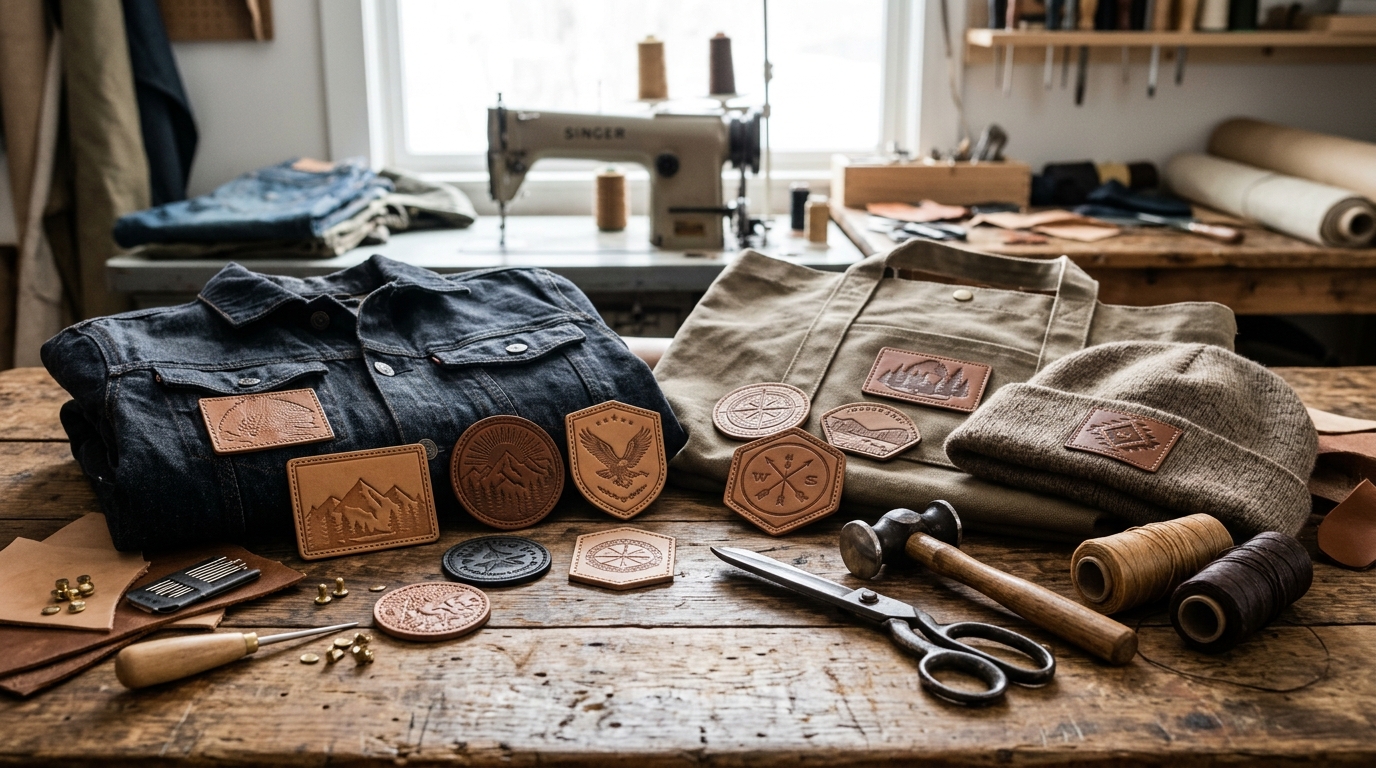
The smallest details can make a big difference to how a clothing product looks and feels. A carefully chosen label, a distinctive logo or a well-made patch can turn an ordinary garment into something more memorable. This is one reason leather patches remain a popular choice for clothing brands, independent designers and businesses across the fashion industry.
Whether they are used on denim jeans, jackets, hats or bags, leather patches add texture and character to a product. They can create a traditional look, give clothing a more premium finish or help a brand build a recognisable identity. With different materials, colours and customisation techniques available, they are also suitable for a wide range of styles.
For businesses searching for leather patches UK, choosing the right design involves more than simply selecting a colour or shape. Material quality, finishing, attachment methods and the intended use of the patch all play an important role.
This guide explores the different types of leather patches, how they can be customised and what to consider when choosing them for clothing, accessories and branding projects.
What Are Leather Patches
Leather patches are labels or decorative pieces made from genuine leather or synthetic materials designed to resemble leather. They are attached to clothing and accessories to display a logo, brand name, artwork or personalised message.
Unlike ordinary fabric labels, leather patches have a textured surface that gives them a distinctive appearance. Depending on the material and finish, they can look traditional, modern, understated or bold.
They are particularly popular in denim clothing, where a leather-style patch is often placed around the back waistband of jeans. However, their use is not limited to denim. Clothing manufacturers and designers also use them on jackets, caps, bags, workwear and other accessories.
Some common applications include:
Denim jeans and trousers
Leather and denim jackets
Hoodies and sweatshirts
Baseball caps and trucker hats
Backpacks and handbags
Workwear and uniforms
Fashion accessories
Promotional merchandise
One of the main advantages of leather patches is their flexibility. They can be produced in different shapes, sizes, colours and thicknesses, allowing businesses to create a design that fits their products.
Custom Leather Patches for Clothing and Branding
Custom leather patches give clothing brands the freedom to create labels that reflect their own identity. Rather than relying on standard designs, businesses can incorporate their logo, brand name, artwork or preferred lettering into a patch made specifically for their products.
This is especially useful for clothing manufacturers that want a consistent appearance across an entire collection. A recognisable patch can help customers identify a brand, while also adding a finishing detail that complements the garment.
Independent designers can benefit from custom patches too. Even a small clothing collection can look more considered when its labels, colours and branding elements follow a consistent style.
There are several ways to customise a leather patch, including:
Custom brand logos and symbols
Engraved lettering and artwork
Embossed or debossed designs
Printed graphics
Custom shapes and dimensions
Different leather colours and textures
Decorative stitching and borders
The best design is usually one that works with the product rather than competing with it. A simple logo with clear lettering can often create a stronger impression than a design containing too many small details.
Leather Patches UK for Fashion Brands and Businesses
The demand for leather patches UK reflects the continuing popularity of personalised clothing and distinctive product branding. From established fashion companies to smaller independent labels, businesses use leather-style patches to give their products a more recognisable finish.
Denim manufacturers are among the most familiar users. A patch placed on the waistband of a pair of jeans can display a brand name or logo while complementing the traditional appearance of denim.
Fashion businesses also use leather patches on caps, jackets, backpacks and accessories. Using the same design across different products can help create a consistent identity throughout a collection.
If you are sourcing leather patches in the UK, it is worth considering a few practical details before placing an order.
Material quality: Choose a material that suits the appearance, intended use and budget of your product.
Customisation options: Check whether the manufacturer can produce your preferred logo, shape, size and finish.
Durability: Consider how the patch will hold up with regular wear and the cleaning requirements of the garment.
Attachment method: Decide whether stitching, adhesive or another compatible method is appropriate.
Order quantities: Make sure the supplier can accommodate your requirements, whether you need a small batch or a larger wholesale order.
Taking time to compare these details can make the ordering process easier and help you achieve a consistent result.
Custom Leather Logo Patches for Professional Branding
A logo is one of the most recognisable parts of a brand. It appears on packaging, websites, clothing and promotional materials, helping customers connect products with the business behind them. Custom leather logo patches offer another way to display that identity.
Instead of using a conventional printed label, a brand can choose a textured patch featuring an engraved, embossed or debossed logo. This creates a more tactile finish and can complement products made from denim, canvas and other durable fabrics.
Leather logo patches are particularly suitable for:
Denim and streetwear brands
Outdoor clothing companies
Fashion retailers
Workwear manufacturers
Bag and accessory businesses
Independent clothing designers
Promotional merchandise suppliers
The artwork should be prepared with the final patch dimensions in mind. Very small lettering and complicated details may not reproduce clearly on a compact surface. Simple shapes, balanced spacing and readable text generally produce a cleaner result.
It is also worth considering where the patch will be placed. A design that looks good on a large jacket may need adjusting before it is used on a small cap.
Genuine Leather Patches for a Natural Finish
Genuine leather patches are made from real animal hide and are often chosen for their natural texture and traditional appearance. Each piece can have slight differences in grain, colour and surface character, giving the finished patch an individual look.
This natural variation is part of the appeal for many clothing brands. Genuine leather can work particularly well with premium denim, traditional workwear, handmade accessories and products inspired by classic fashion.
Common uses include:
Designer jeans
Leather jackets
Premium bags
Traditional clothing labels
Handmade accessories
Workwear and outdoor products
Genuine leather can also change in appearance over time. Depending on the type of leather and how it is cared for, it may develop a worn or aged finish that suits vintage-inspired products.
However, it is important to consider maintenance before choosing this material. Genuine leather may need more careful cleaning than ordinary fabric labels, and excessive moisture or unsuitable cleaning products can affect its appearance.
For garments that need frequent washing, check the manufacturer's care recommendations before making a final decision.
Faux Leather Patches for Flexible Custom Designs
Faux leather patches provide an alternative for businesses that want a leather-like appearance without using genuine animal hide. They are made from synthetic materials and are available in different colours, textures and thicknesses.
For some clothing brands, faux leather is a practical choice because it offers greater flexibility in material selection. It can also be suitable for collections that require a consistent appearance across a larger number of products.
Potential benefits include:
A range of colours and surface textures
Consistent appearance across multiple patches
Custom branding options
Different choices to suit various budgets
Animal-free material alternatives
Suitability for a variety of clothing and accessories
The quality of faux leather can vary depending on its composition and manufacturing process. Some materials may be more flexible, while others are designed to provide a firmer surface.
It is therefore worth checking the manufacturer's specifications and requesting a sample when possible. This helps you assess the texture, thickness and overall finish before committing to a larger order.
Embossed Leather Patches for Raised Designs
Embossing is a popular way to add texture to a leather patch. The process presses a design into the material to create raised lettering or artwork, giving the finished patch a noticeable three-dimensional effect.
This technique is often used for brand names, logos, symbols and simple decorative patterns. It works particularly well when a business wants its branding to look distinctive without relying on several printed colours.
For example, a denim brand might choose a brown leather patch with an embossed logo for the back waistband of its jeans. The raised design adds detail while keeping the overall appearance traditional.
Embossed leather patches are often a good choice for:
Clothing brand logos
Denim labels
Premium accessories
Traditional fashion designs
Simple lettering and symbols
The design should be clear enough to translate into a raised finish. Bold lettering and recognisable shapes usually work better than artwork containing very fine details.
Debossed Leather Patches for Understated Branding
Debossing creates the opposite effect to embossing. Instead of raising the design above the surface, the process presses lettering or artwork into the material to create recessed details.
The result is a subtle finish that suits businesses looking for understated branding. It allows a logo or brand name to become part of the patch without making the design look overly prominent.
Debossed leather patches can feature:
Company logos
Brand names
Personal initials
Decorative symbols
Custom lettering
Simple artwork
The technique can be used with genuine leather and certain synthetic materials, depending on their composition and suitability for the production process.
For minimalist clothing collections, debossing can be an effective option. It adds detail while allowing the material's natural texture and colour to remain the main focus.
Engraved Leather Patches for Detailed Personalisation
Engraving is another popular method for customising leather patches. It marks a design into the surface of a suitable material, creating defined lettering, logos or decorative artwork.
Laser engraving is commonly used for compatible leather materials because it can reproduce precise details. It is useful for brands that want more detailed artwork or individuals who want to personalise a product with a name or initials.
Engraved leather patches are suitable for:
Personalised names
Business logos
Custom lettering
Small decorative designs
Gift products
Branded bags and accessories
The material must be compatible with the chosen engraving process. Different types of leather and synthetic alternatives can react differently, so it is sensible to confirm suitability with the manufacturer.
A sample can also help you check how the engraved design will look before approving the final production.
Leather Patches for Jeans and Denim Clothing
Denim and leather patches have a long-standing connection in fashion. Many jeans manufacturers use a leather-style label around the back waistband to display their brand name or logo.
This placement works well because the texture of the patch complements the durable appearance of denim. It also gives the garment a recognisable finishing detail without changing its overall style.
Leather patches for jeans can be customised with:
Brand names and logos
Collection details
Engraved graphics
Decorative borders
Custom lettering
Distinctive shapes
Brown remains a classic choice because it contrasts naturally with many shades of denim. Black and other colours can create a more contemporary appearance.
When designing patches for a clothing range, consider how they will look across different washes and garment colours. Consistent dimensions and colour choices can help maintain a professional appearance throughout the collection.
The attachment method is equally important. The patch should be secured appropriately so that it remains in place during normal wear.
Leather Jacket Patches for Personalised Fashion
A leather jacket already has a distinctive appearance, but a carefully selected patch can make it more individual. Leather jacket patches are used for fashion branding, decorative designs and personalised details.
Depending on the jacket material and construction, patches may be attached through stitching or another suitable method. Popular designs include brand logos, vintage-inspired graphics, initials, symbols and custom lettering.
Before attaching a patch to a genuine leather jacket, think carefully about its position. Sewing creates permanent holes in leather, so moving the patch later may leave visible marks.
The thickness of the jacket and patch should also be considered. A heavy patch may not be suitable for every area, particularly where the material needs to remain flexible.
For expensive garments or complicated designs, professional attachment can help achieve a cleaner finish.
Custom Leather Patches for Hats and Caps
Leather patches are also widely used on baseball caps, snapback hats, trucker caps and outdoor headwear. A small patch featuring an engraved or embossed logo can give a simple cap a more distinctive appearance.
They are popular with streetwear labels, outdoor clothing companies, sports merchandise businesses and promotional product suppliers.
When designing a patch for a hat, size and placement matter. A patch that is too large can overwhelm the front panel, while one that is too small may make the logo difficult to recognise.
The material should also be suitable for the shape and construction of the cap. A lightweight patch and appropriate attachment method can help maintain the appearance of the finished product.
Leather Patches for Bags and Accessories
Custom leather patches can add both branding and decoration to backpacks, handbags, travel bags and other accessories.
For businesses selling several types of products, using the same patch design across different items can create a more consistent brand identity. A logo used on jeans, caps and backpacks, for example, helps connect each product to the same collection.
Leather patches for bags can be made in different shapes and sizes to suit the available space. They can also feature engraved or embossed artwork for a more refined finish.
When selecting a patch, consider the material of the bag, how frequently it will be used and whether the patch needs to withstand regular handling. A suitable attachment method can help maintain its appearance over time.
Sew On Leather Patches for Secure Attachment
Sew-on leather patches are attached directly to a garment or accessory using stitching. They are a practical choice when a secure attachment is important.
They can be used on denim jeans, jackets, fabric bags, workwear, hats and many other products.
The stitching should suit the thickness of the patch and the material it is being attached to. Genuine leather may require suitable needles and equipment, while the thread should be strong enough for the intended use.
For products that experience regular wear, neat stitching can make a noticeable difference to the final appearance. It is also worth checking the position of the patch before sewing, particularly when working with leather garments where needle holes remain visible.
Iron On Leather Patches and Other Attachment Options
Iron-on patches usually feature a heat-activated adhesive backing. However, this does not mean that every leather patch can safely be attached using an ordinary household iron.
Genuine leather and some synthetic leather materials can be sensitive to high temperatures. Applying too much heat may affect the surface, change the shape of the material or damage the finish.
Depending on the patch and garment, suitable attachment options may include:
Sew-on backing
Compatible adhesive
Manufacturer-approved heat application
Other custom attachment methods
Always check the manufacturer's instructions before applying heat or adhesive. If the material is not designed for heat application, sewing may be a more appropriate option.
Choosing the right attachment method at the design stage can help prevent problems once the patches are ready to use.
Personalised Leather Patches for Gifts and Special Projects
Leather patches are not only useful for commercial clothing. They can also add a personal touch to gifts, handmade products and individual accessories.
A patch featuring someone's name, initials or a meaningful design can make an everyday item feel more personal. It can be used on a hat, bag, keyring or clothing item to create something that reflects the recipient's style.
Some popular ideas include:
Personalised leather labels
Engraved initials
Custom hat patches
Personalised bag details
Handmade clothing labels
Special event accessories
Custom designs for craft projects
The design can be kept simple or made more decorative, depending on the intended use. Choosing the right wording, shape and finish helps create a patch that feels considered rather than generic.
Wholesale Leather Patches for Clothing Manufacturers
Businesses that use leather patches regularly may benefit from ordering in larger quantities. Wholesale leather patches are particularly useful for clothing manufacturers, fashion brands, retailers and businesses producing accessories.
Ordering multiple patches together can help maintain consistency across a product range. Depending on the supplier and production requirements, larger quantities may also reduce the average cost per patch.
Wholesale orders are commonly used by:
Denim manufacturers
Clothing retailers
Fashion brands
Workwear suppliers
Bag manufacturers
Promotional merchandise companies
Independent designers
Before approving a larger order, make sure the artwork, dimensions, material and finishing requirements are finalised.
It is also sensible to request a sample where possible. Checking the actual material and finish can help you identify any adjustments needed before full production begins.
Choosing Custom Leather Patch Manufacturers UK
Finding reliable custom leather patch manufacturers UK is an important part of getting the result you want. A suitable manufacturer should be able to explain the available materials, production techniques and attachment options.
Price is worth considering, but it should not be the only deciding factor. The quality of the material, accuracy of the artwork and consistency of production can all affect the finished product.
Here are a few things to look at when comparing manufacturers.
Material Knowledge
A manufacturer should be able to explain the differences between genuine leather and synthetic alternatives. This makes it easier to select a material that suits your product and budget.
Custom Design Support
Check whether the supplier can work with your own logo, artwork, preferred dimensions and shape. Clear communication about design requirements can help avoid mistakes during production.
Available Finishes
Ask which finishing techniques are available. These may include embossing, debossing, engraving and printing, depending on the selected material.
Production Quality
Look for clean edges, consistent thickness, accurate colours and well-defined designs. These details are especially important when ordering patches for an entire clothing range.
Order Flexibility
Some businesses need only a small quantity for a new collection, while others require regular wholesale production. Confirm that the manufacturer can accommodate your order size.
Pricing and Production Times
Request a clear quotation that explains the costs, minimum order quantities and estimated production and delivery times. Having these details in advance makes planning easier.
A manufacturer that communicates clearly and understands your requirements can make the process much smoother.
How to Design the Right Custom Leather Patch
A successful leather patch starts with a design that suits the product. Before sending artwork to a manufacturer, think about how the finished patch will look, where it will be placed and how it will be used.
Start With the Material
Decide whether genuine leather or faux leather is more appropriate. Consider the appearance you want, the garment's care requirements and your budget.
Choose the Shape and Size
Rectangular, square, oval and circular patches are common choices, but custom shapes may also be possible. The dimensions should suit the available space on the garment or accessory.
Keep the Artwork Readable
A patch is often much smaller than the original logo file. Avoid unnecessary detail and make sure the lettering remains clear at the final size.
Select a Finish
Embossed, debossed, engraved and printed designs all create different results. Choose a finish that complements your brand and the material.
Think About Colour
Brown, black and natural leather shades are popular options. Other colours may also be available, depending on the material and production method.
Plan the Attachment
Consider whether the patch will be stitched, attached with a suitable adhesive or produced with another compatible backing. The choice should reflect the garment's material and intended use.
Preparing these details before requesting a quotation can help the manufacturer understand your requirements and provide a more accurate result.
Caring for Leather Patches
The right care can help maintain the appearance of leather patches and keep them looking presentable for longer. Cleaning requirements depend on whether the patch is made from genuine leather or a synthetic alternative.
For general care, keep these points in mind:
Follow the garment manufacturer's washing instructions.
Avoid exposing genuine leather to excessive moisture.
Use suitable leather cleaning products when recommended.
Avoid harsh chemicals and abrasive cleaning methods.
Do not apply direct heat without checking material compatibility.
Store leather accessories in a dry environment.
Check stitching and attachment points from time to time.
If the patch is attached to a garment that needs frequent machine washing, check whether the selected material is suitable. It is better to consider cleaning requirements before production than to discover later that the patch does not suit the garment's care routine.
Why Leather Patches Remain a Popular Branding Choice
Fashion trends change, but the appeal of distinctive product details remains. Leather patches offer a combination of texture, branding and personalisation that works across many types of clothing and accessories.
For denim brands, they provide a familiar finishing detail. For independent designers, they offer a way to make products feel more individual. For businesses producing bags, hats and workwear, they create another opportunity to display a recognisable logo.
Their versatility is another reason they continue to be used. A brand can choose genuine leather for a natural finish, faux leather for an animal-free alternative or a particular engraving technique to create a specific look.
The most effective designs are those that feel connected to the product. A well-proportioned logo, suitable material and clean finish can make a patch look like a natural part of the garment rather than an afterthought.
Give Your Clothing and Accessories a Distinctive Finish
A well-designed leather patch can do more than display a name or logo. It can bring together the colours, materials and overall identity of a clothing collection. Whether used on jeans, jackets, caps or bags, it adds a finishing detail that customers can recognise and remember.
The right choice depends on what you are making. Genuine leather offers a natural texture, while faux leather provides an alternative with its own range of colours and finishes. Embossing, debossing and engraving create different visual effects, and the attachment method should always suit the garment.
If you are planning a new clothing range or updating existing products, start with a clear design and think carefully about the material, size and intended use. Compare manufacturers, check samples where possible and make sure the final patch complements the product.
With the right combination of design and production quality, custom leather patches can help give your clothing and accessories a consistent, professional identity.
Conclusion
Leather patches are more than just decorative labels. They help clothing brands create a recognisable identity, add character to garments and give everyday products a more refined finish. Whether used on denim jeans, jackets, hats or bags, the right patch can make a product stand out while keeping its overall design consistent.
From genuine and faux leather to embossed, debossed and engraved finishes, there are plenty of options to suit different styles and budgets. Choosing the right material, design and attachment method is essential to achieving a result that looks good and performs well over time.
For clothing manufacturers, independent designers and fashion businesses, custom leather patches offer a practical way to bring branding and creativity together. By working with a reliable manufacturer and paying attention to the small details, you can create patches that complement your products and leave a lasting impression on customers.

Discussion & Feedback 0
Write a CommentNo comments yet
Have a question or feedback regarding this topic? Be the first to share your thoughts below!
Leave a Reply
Your email address will not be published. Required fields are marked *