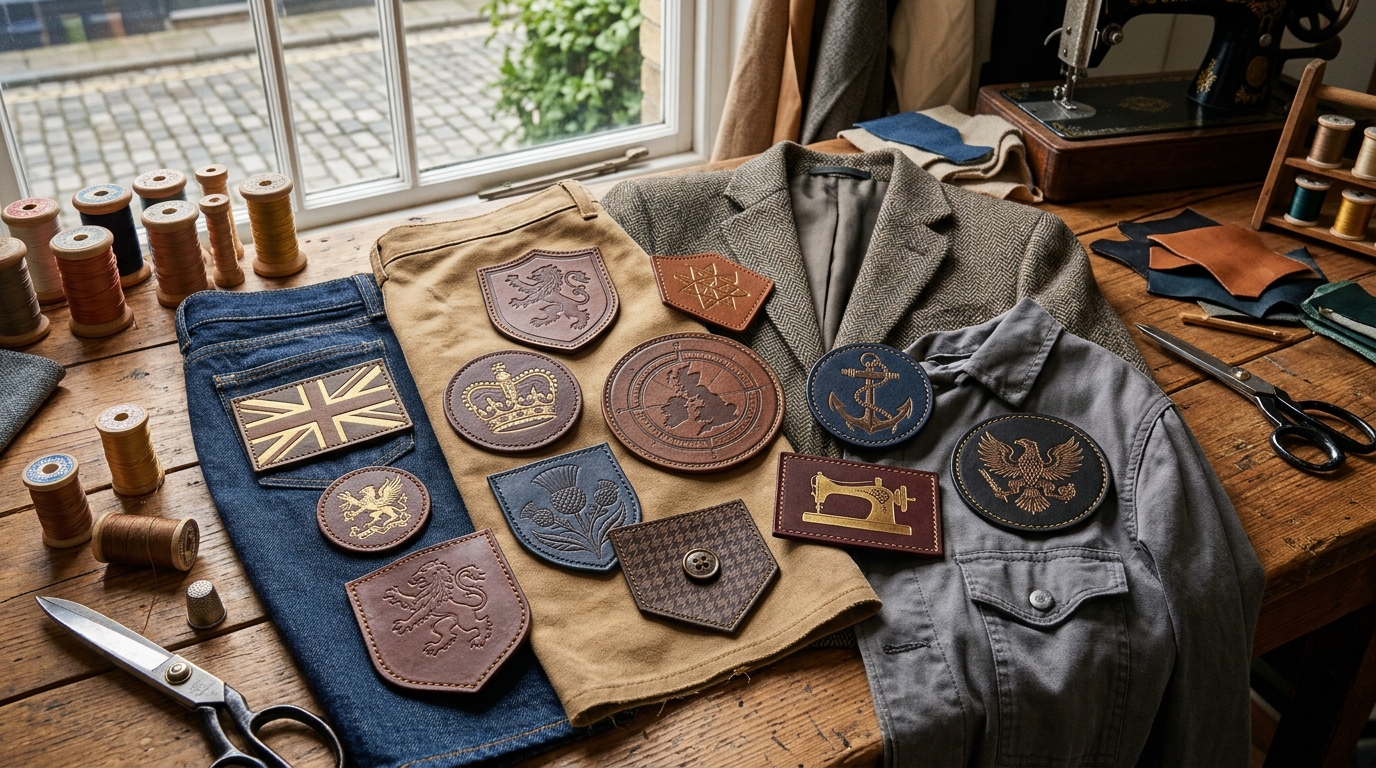
Custom leather patches are a popular choice for clothing brands, independent designers and businesses looking to give their products a distinctive and professional finish. From denim jeans and jackets to caps, bags and workwear, a carefully designed leather patch adds character while providing a practical way to display a business name, logo or unique design.
For UK clothing brands, custom leather patches offer more than a decorative detail. They help establish a recognisable identity, create consistency across product collections and give garments a more considered appearance. Whether you are launching a new fashion label or managing an established clothing business, personalised leather patches can be tailored to suit your products and branding requirements.
With different leather colours, shapes, sizes and finishing techniques available, businesses can create patches that complement their products rather than simply adding another label. Choosing the right material and design can make a noticeable difference to the finished garment.
Why Custom Leather Patches Make Clothing Brands More Distinctive
Brand identity is built through the details customers recognise. Fabric choices, stitching, colours and labels all contribute to the overall appearance of a garment. Leather patches provide another opportunity to create a consistent and memorable brand image.
Unlike conventional printed labels, leather patches introduce a textured finish that works particularly well with denim, canvas and heavier fabrics. They can feature a simple company name, an intricate logo or a distinctive brand symbol.
For fashion businesses, using the same leather branding across different products helps establish a familiar appearance. A patch on a pair of jeans can complement the branding on jackets, caps and accessories, creating a consistent look throughout the collection.
The choice of finish also influences the overall style. Natural brown leather often suits heritage-inspired clothing, while black and darker shades can complement contemporary fashion and streetwear.
By selecting a design that matches the character of your products, you can create leather patches that feel like an integral part of the garment.
Personalised Leather Patches Designed Around Your Brand
Every clothing business has its own identity, which is why ready-made labels may not always provide the right solution. Personalised leather patches allow businesses to create designs that reflect their branding, product style and intended audience.
Depending on your requirements, a custom patch can include:
Business names and brand logos
Initials and distinctive lettering
Slogans and short brand messages
Decorative symbols and illustrations
Custom shapes and outlines
Different leather colours and finishes
Size and shape are equally important. A compact rectangular patch may be suitable for a jeans waistband, whereas a larger design could work better on a jacket, backpack or promotional product.
Independent fashion labels can particularly benefit from bespoke designs because they offer greater flexibility than standard branding options. Even a simple logo can become recognisable when it appears consistently across different products.
For the best results, keep the artwork clear and avoid unnecessary small details. This is particularly important when lettering or intricate designs need to be embossed, debossed or engraved onto a smaller leather surface.
Custom Leather Patches With Logo for Professional Branding
A business logo is one of the most recognisable elements of its identity. Displaying it on clothing and accessories creates another way for customers to connect individual products with the brand behind them.
Custom leather patches with logo designs are suitable for fashion labels, denim manufacturers, outdoor clothing companies and businesses producing branded merchandise.
Different production techniques can be used to reproduce your artwork. Embossing creates a raised impression, while debossing presses the design into the leather surface. Laser engraving provides another option for logos and artwork that require finer details.
The right technique depends on the design, leather material and appearance you want to achieve.
Before approving production, consider how your logo will look at the actual patch dimensions. Small lettering and fine lines may need adjusting to remain clear on the finished product.
For larger orders, requesting a physical sample is a sensible way to check the artwork, colour and overall finish before proceeding with full production.
Leather Logo Patches for Consistent Clothing Collections
Maintaining consistent branding across different products helps clothing businesses build a recognisable identity. Leather logo patches make it possible to use familiar branding across several garment styles without making every product look identical.
For example, a fashion label could use a larger leather patch on denim jackets, a smaller version on jeans and a compact design on caps.
The logo remains recognisable, while the dimensions and placement are adjusted to suit each product.
This flexibility is also useful for seasonal collections and limited-edition releases. Businesses can introduce alternative leather colours or customised designs while keeping their main brand identity intact.
When planning multiple versions, it is worth establishing a consistent design style. Keeping the logo, lettering and finishing technique similar across different sizes helps maintain a unified appearance.
Custom Leather Labels for Clothing and Accessories
Leather labels offer a practical way to display branding on garments, handmade products and accessories. They can feature a company name, logo, initials or a short message, depending on the available space and intended use.
Custom leather labels are commonly considered for:
Jeans and denim jackets
Shirts and casual clothing
Hoodies and sweatshirts
Workwear and uniforms
Canvas bags and backpacks
Handmade accessories
Wallets and lifestyle products
The position of a label should influence its dimensions and construction. A waistband label, for example, may require a different shape and thickness from one attached to a sleeve or bag.
Attachment options can include stitching, rivets and other suitable fixing methods. The best choice depends on the garment material, product design and expected everyday use.
A well-designed leather label should sit neatly against the product without interfering with its appearance or functionality.
Leather Patches for Clothing That Combine Style and Practicality
Leather patches for clothing are suitable for a wide range of garments because they can complement different fabrics and design styles.
Denim remains one of the most familiar applications. A leather patch on the waistband of jeans creates a traditional finish while providing space for the manufacturer's name or logo.
Jackets offer more flexibility in terms of placement. Depending on the garment, patches can be positioned on the chest, sleeves, pockets or back.
Other suitable applications include:
Denim jeans, shorts and skirts
Casual jackets and outerwear
Hoodies and sweatshirts
Workwear and branded uniforms
Canvas clothing and accessories
Outdoor garments
Handmade fashion products
Material selection is particularly important for garments that experience frequent wear or cleaning. The patch should be appropriate for the fabric and intended care requirements.
Businesses should also consider the attachment method before production. Secure stitching is often a practical option, although the most suitable approach will depend on the garment's construction.
Combining the right material, size and placement helps ensure the patch complements the clothing while remaining practical.
Custom Leather Hat Patches for Caps and Headwear
Custom leather hat patches provide an alternative to traditional embroidered and printed branding. They add texture to headwear and can create a distinctive finish for fashion labels, outdoor brands and promotional merchandise.
They are particularly suitable for baseball caps, trucker hats and casual outdoor headwear.
A front-facing leather patch can display a company logo, brand name, initials or custom illustration. Depending on the artwork and leather finish, the design can create a traditional, rugged or contemporary appearance.
When designing hat patches, dimensions should be considered carefully. The patch needs to fit the front panel without covering seams or making the cap look crowded.
Rectangular and square designs are popular choices, although circular and bespoke outlines can provide a more individual appearance.
Embossed, debossed and laser-engraved finishes can all be considered, depending on the material and complexity of the artwork.
The attachment method should also be suitable for the cap's construction. Stitching and other appropriate fixing options can help create a neat and secure finish.
Leather Patches for Hats for UK Clothing Brands
Businesses producing headwear often want consistent branding across different cap styles and colour combinations. Leather patches for hats provide an adaptable solution because the same logo can be reproduced in different dimensions.
An outdoor clothing brand might choose natural brown leather for a traditional appearance, while a streetwear label could prefer black leather with a simpler, modern design.
Personalised hat patches are also useful for clubs, teams, events and promotional products. Businesses can develop exclusive designs for particular collections without changing their main branding.
Before ordering, check the available front panel space and consider how the patch will look alongside the cap's stitching, fabric and other details.
This helps ensure that the finished headwear looks balanced and professionally presented.
Custom Leather Jacket Patches for Fashion and Workwear
Jackets provide several opportunities to introduce leather branding. Custom leather jacket patches can be designed for chest panels, sleeves, pockets and other suitable positions.
For fashion brands, a small leather patch can provide a subtle finishing detail, while larger designs may suit casual jackets and statement outerwear.
Workwear manufacturers can also use personalised leather patches to display company names and logos across branded garments. This can help create a consistent appearance for staff uniforms and business clothing.
The weight and thickness of the patch should match the jacket material. Heavy denim and canvas can generally accommodate different patch constructions from lightweight fabrics.
Placement is equally important. A patch should sit comfortably without pulling the fabric or interfering with pockets, seams and other garment features.
Discussing the garment construction and attachment requirements before production helps achieve a finish that suits the intended use.
Embossed and Debossed Leather Patches for a Premium Finish
The finishing technique plays an important role in the appearance of a custom leather patch. Embossing and debossing are two popular options for businesses looking to add texture without relying on printed colours.
Embossed leather patches feature a raised design created by pressing the artwork into or onto the leather. This technique can make logos, lettering and simple symbols more noticeable.
Debossed leather patches feature a recessed impression, with the artwork pressed into the material. The result is often more understated and works particularly well for businesses that prefer subtle branding.
Both methods can be used for clothing labels, denim patches, caps, bags and accessories.
The final appearance depends on the leather material, artwork and production process. Clear lettering and well-defined shapes generally produce better results than extremely fine details.
If your logo includes small text or intricate elements, ask the manufacturer to review the artwork and recommend suitable adjustments before production.
Laser Engraved Leather Patches for Detailed Logo Designs
Laser engraving offers another way to personalise leather patches. It uses a controlled laser process to mark the surface and reproduce logos, lettering and decorative artwork.
Laser engraved leather patches can be useful for designs that require finer lines or more detailed elements than traditional pressing techniques may accommodate.
This method is suitable for different applications, including clothing labels, hat patches, bags and handmade accessories.
The finished appearance can vary according to the leather type, surface treatment and engraving settings. For this reason, reviewing a sample is particularly useful when the design contains intricate details.
Businesses should provide clear, high-quality artwork and discuss any particularly small elements with their manufacturer.
Choosing the appropriate engraving method helps ensure that the finished patch represents the original design clearly.
Choosing the Right Leather for Custom Patches
The material used for a leather patch affects its texture, appearance, thickness and suitability for different products.
Some businesses prefer natural leather with visible grain and subtle variations, while others favour a more uniform surface for consistent branding.
When choosing leather for custom patches, consider the following factors:
Leather colour: Brown, tan and natural shades complement traditional denim and heritage clothing. Black and darker finishes often suit contemporary fashion collections.
Thickness: Heavier patches can work well on denim jackets and canvas bags, whereas lighter garments may require a thinner material.
Surface texture: Smooth finishes can provide a clean background for logos, while textured surfaces offer a more traditional appearance.
Durability: Consider how frequently the garment will be worn and the conditions in which it will be used.
Care requirements: Discuss cleaning and washing limitations with the manufacturer, particularly if the patches will be attached to garments that require regular laundering.
The material should complement both the garment and its intended purpose. Selecting it carefully at the beginning helps avoid unnecessary adjustments during production.
Bespoke Leather Patches Made to Your Specifications
Some clothing businesses need more than standard rectangular labels. Bespoke leather patches offer greater flexibility, allowing designs to be created around specific branding and product requirements.
Businesses can choose custom dimensions, shapes, colours and finishing techniques to achieve the desired appearance.
A bespoke patch might feature an unusual outline, a combination of lettering and symbols or a particular surface finish that reflects the identity of a clothing collection.
This approach is particularly useful for independent designers, premium fashion labels, handmade product businesses and companies producing exclusive merchandise.
Different versions can also be developed for separate product ranges. For example, a business might use one design for its main collection and another for a limited-edition release.
Preparing the artwork and confirming the specifications before production makes the process more straightforward and helps ensure the finished patch matches your expectations.
Wholesale Leather Patches UK for Clothing Manufacturers
For businesses with regular production requirements, ordering wholesale leather patches can make planning and stock management easier.
Wholesale leather patches UK suppliers provide are suitable for clothing manufacturers, fashion retailers, independent labels and businesses producing branded merchandise in larger quantities.
Ordering in bulk can help maintain consistency when the same patch design is used across multiple garments or product collections.
Before confirming a wholesale order, consider these important points:
Finalise the artwork and approve the design.
Confirm the required patch dimensions and shapes.
Select the leather material and finishing method.
Discuss minimum order quantities.
Confirm production and delivery lead times.
Check whether samples are available.
Establish whether future orders can follow the same specifications.
Larger orders require careful preparation, particularly when several patch sizes or variations are involved.
A supplier capable of supporting both sample development and repeat production can make the process easier for growing clothing businesses.
How to Choose a Reliable Leather Patch Manufacturer in the UK
Finding a suitable manufacturer is an important part of producing quality leather patches. The finished result depends on the materials, artwork preparation, production methods and consistency of manufacturing.
When comparing leather patches manufacturers in the UK, consider their experience with custom designs and the production techniques they offer.
It is worth asking potential suppliers about:
Material options: Find out which leather types, colours, textures and thicknesses are available.
Customisation methods: Check whether they offer embossing, debossing, laser engraving and bespoke shapes.
Sample production: Ask whether you can approve a sample before committing to a larger order.
Minimum order quantities: Make sure their requirements are suitable for your business.
Production lead times: Discuss expected turnaround times, particularly if you are working towards a clothing collection launch.
Quality consistency: For repeat and wholesale orders, ask how they maintain consistent dimensions, colours and finishes.
If UK-based production is important to your business, confirm where the patches are actually manufactured rather than assuming that a UK supplier necessarily produces everything locally.
Comparing these details helps you make a more informed decision and choose a supplier that understands your requirements.
Bulk Custom Leather Patches for Growing Businesses
As a clothing brand expands, its production requirements often become more demanding. Bulk custom leather patches can help businesses maintain a consistent supply of branded labels for regular manufacturing.
They are particularly useful for companies producing jeans, jackets, caps, bags and other accessories in larger quantities.
Before placing a bulk order, make sure the final specifications are confirmed. This includes the artwork, material, patch dimensions, colour and attachment requirements.
It is also worth considering whether different products need different patch sizes.
For example, a manufacturer producing both denim jackets and jeans may require two versions of the same logo. Using consistent artwork while adjusting the dimensions can help maintain a recognisable appearance across the collection.
Storage should also be considered when ordering large quantities. Keeping patches in suitable conditions helps protect them before they are attached to finished garments.
Careful planning makes wholesale ordering easier to manage and reduces the need for repeated small production runs.
Preparing Your Artwork for Custom Leather Patch Production
Good artwork is essential for achieving a clear and professional finish. Before sending your design to a manufacturer, check that the file is suitable for the intended production method.
Vector artwork is often useful because it can be resized without losing clarity. However, the manufacturer should confirm the preferred file format and any specific artwork requirements.
Pay attention to these details:
Check that the business name and wording are correct.
Make sure the logo is suitable for the intended patch size.
Avoid unnecessary small lettering and fine lines.
Use clear shapes and recognisable design elements.
Decide whether embossing, debossing or engraving is preferred.
Confirm the final dimensions and outline.
Choose a leather colour that complements the garment.
It is also helpful to explain where the patch will be attached. A design intended for the waistband of jeans may need different proportions from one created for a cap or jacket.
Providing accurate information at the beginning allows the manufacturer to review the design and suggest any necessary changes before production starts.
Bringing Your Custom Leather Patch Design to Life
Creating a suitable leather patch begins with understanding the product you want to brand. Consider the garment, its materials and the overall appearance you want customers to associate with your business.
Once you have established the design direction, prepare your logo and decide on the appropriate patch dimensions. You can then select the leather colour, thickness, shape and finishing technique.
The next step is to discuss your requirements with a manufacturer. Ask about sample production, minimum quantities, attachment methods and expected lead times.
For larger orders, approving a sample before full production is a worthwhile step. It gives you the opportunity to check the appearance and quality of the finished design before committing to the complete quantity.
Whether you need a small batch for a new fashion label or wholesale production for an established clothing range, having clear specifications helps keep the process organised.
Conclusion
Custom Leather Patches UK businesses choose provide an effective way to strengthen clothing branding and give garments a distinctive finish. From personalised leather labels and custom logo patches to bespoke hat and jacket designs, there are numerous ways to incorporate leather details into clothing and accessories.
The best results come from selecting materials, dimensions and finishing techniques that complement the product. Embossing, debossing and laser engraving each offer different design possibilities, while the right attachment method helps ensure the patch suits its intended application.
For clothing manufacturers and fashion brands ordering wholesale leather patches, careful planning is equally important. Preparing accurate artwork, reviewing samples and confirming production requirements can help achieve consistent results across different collections.
Whether you are developing your first clothing range or expanding an established business, well-designed leather patches can provide a recognisable finishing detail that brings your brand identity together.

Discussion & Feedback 0
Write a CommentNo comments yet
Have a question or feedback regarding this topic? Be the first to share your thoughts below!
Leave a Reply
Your email address will not be published. Required fields are marked *